Recognising and celebrating Country
At the heart of the Aerotropolis is Wianamatta, Western Sydney’s longest freshwater stream, located in Dharug Country. In the Dharug language, Wianamatta means “Mother Place,” reflecting its cultural and environmental significance.
This waterway is central to the area’s identity and heritage, and its preservation plays a crucial role in maintaining the natural environment and the cultural practices of the Dharug Community. If left unprotected, urban growth will degrade this vital waterway, but with the right planning and ongoing involvement from Traditional Custodians it can become one of the city’s greatest assets.
Dharug Knowledge Committee
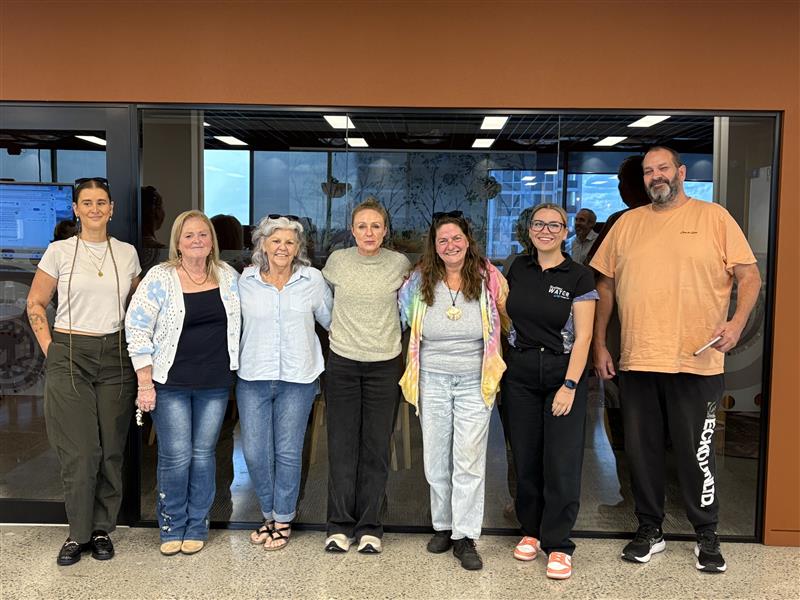
On Wednesday 29th April 2026 the first Dharug knowledge Committee meeting was held at Yarpa Hub marks a major milestone for Sydney Water in Aboriginal engagement, creating a dedicated, Dharug‑led space to inform water and planning decisions on Country for Wianamatta. Members shared clear priorities around Caring for Country, development impacts, heat risk, underground waterways, impacts to animals and species and the value of cultural knowledge as practical solutions that Sydney Water being the Stormwater Authority can implement to help Country.
Integrated Water Cycle Management
We've used an Integrated Water Cycle Management (IWCM) approach to develop the Aerotropolis Integrated Stormwater Scheme.
The IWCM approach coordinates and considers all elements of water management and urban planning across the scheme areas, recognising and celebrating cultural heritage, protecting waterway health, prioritising sustainable water supplies and helping to cool and green Western Sydney.
Taking this regional approach allows infrastructure to be placed efficiently in the scheme areas. It will minimise the amount of stormwater infrastructure required on development sites, ultimately maximising developable land.
The Scheme has been designed in line with the Stormwater Principles, which were developed in consultation with government, industry and community.
Protecting waterway health
Wianamatta’s ecosystems are fragile and unique. To protect them, we have followed the Dharug People’s approach of Letting Country be Country, shaping the layout and structure of the Integrated Scheme around existing waterways. Where stormwater treatment is required, we‘ve prioritised natural treatment systems over concrete pits and channels.
To make sure that the Scheme is meeting environmental outcomes, we’ve designed the system using locally specific waterway health targets for pollutant reduction and flow. For more information on these targets, see the Resources box in the bottom right of this page.

Sustainable water supply
To meet the waterway health targets for Wianamatta, some of the stormwater runoff needs to be harvested for reuse.
Most water reuse schemes depend on rainfall – but in Western Sydney, where the weather is often dry and droughts are becoming part of life, we need to do things differently. Since rain isn’t always reliable, we’re proposing to add recycled wastewater to the system when there’s not enough rainfall.
This means that even when other parts of Sydney are under drought restrictions, water supply in the Aerotropolis will be more secure. This makes it more appealing to high value industries that need a large secure water source, such as data centres.
Cooling and greening Western Sydney
In the future, Western Sydney will experience more frequent and prolonged heatwaves which will put pressure on its community, natural environment and economy. To help manage urban heat, a blue-green grid of parklands and waterways is proposed that will provide cooling and amenity to communities that live and work in the area.
To work, the blue-green grid needs a climate independent water supply to stay cool and green. The scheme, fed by stormwater and recycled wastewater will provide irrigation to parklands and street plantings throughout the Aerotropolis in the hottest and dryest times when we need it the most.